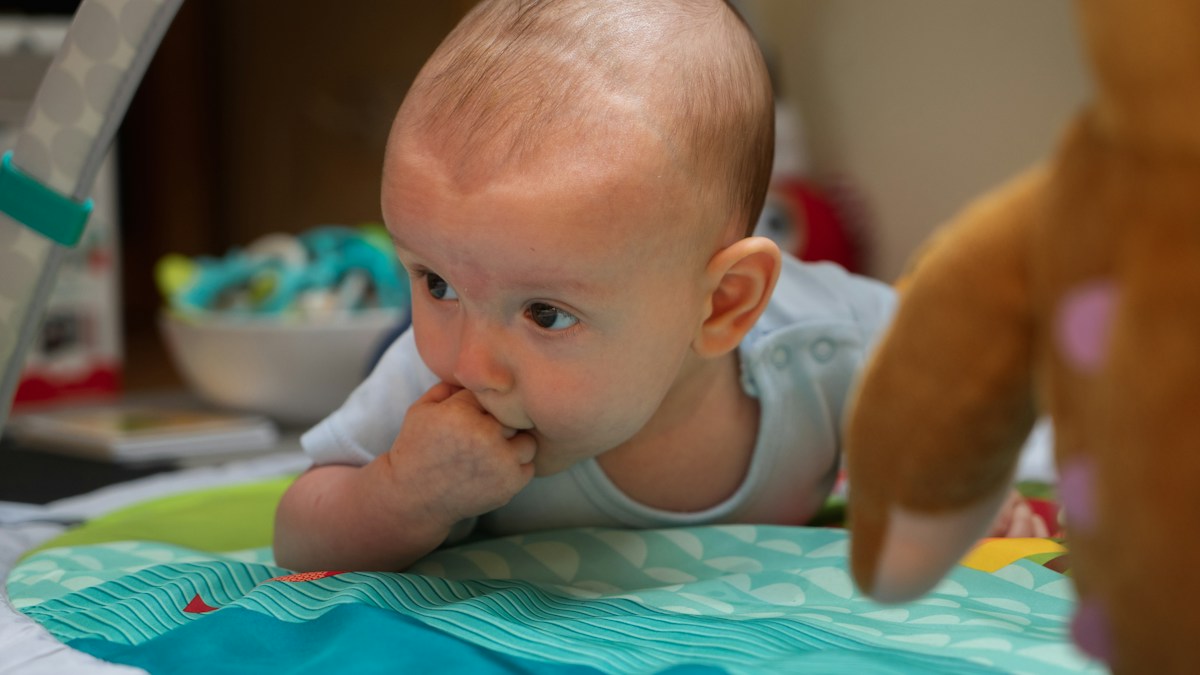
Four months can be an exciting stage in your baby’s development. Your baby may smile to get your attention, make little sounds when you talk, hold their head more steadily and show growing interest in their hands and toys. Play may become more interactive as your baby starts exploring objects and responding to familiar people.
You may also notice that your baby is becoming stronger during tummy time. Some babies push up on their forearms, reach towards toys or begin showing movements that may eventually lead to rolling. These changes happen gradually, and not every baby develops each skill at exactly the same time.
This is also a time when many parents begin to notice how much their baby’s personality is developing. Your baby may have favourite sounds, enjoy certain games or show clear excitement when a familiar person enters the room.
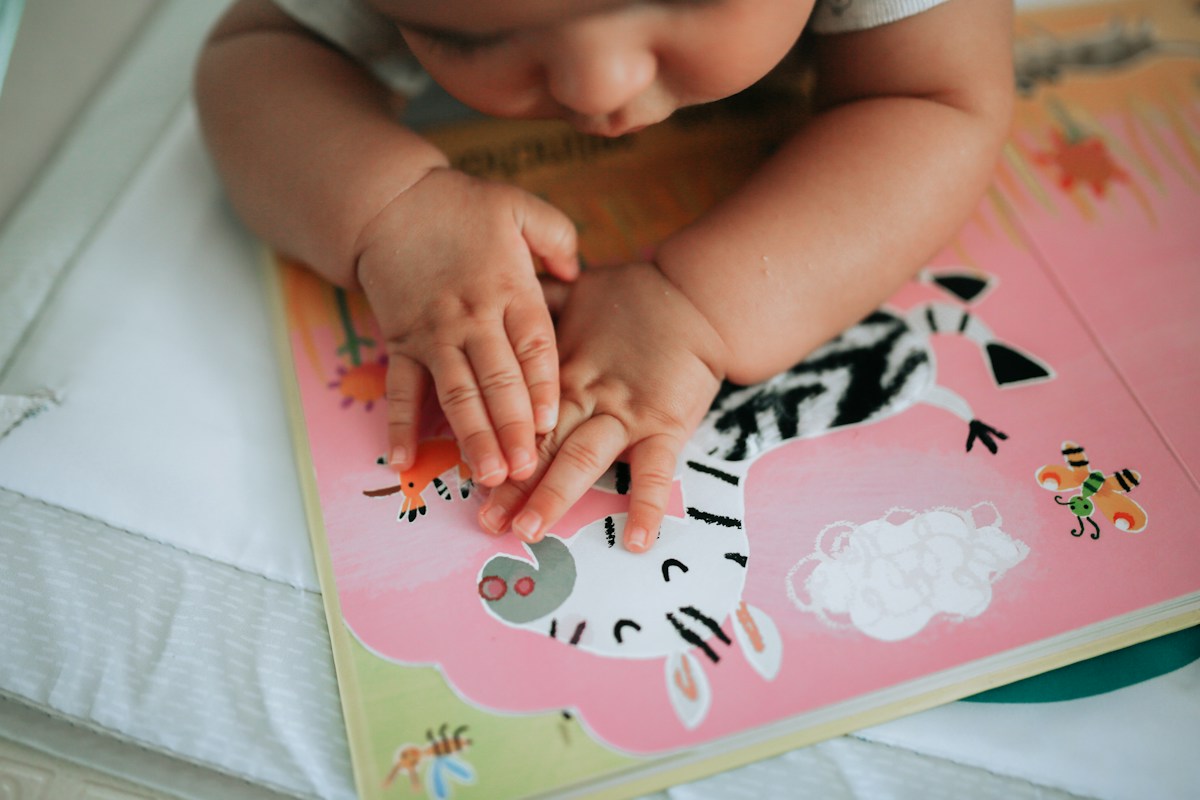
Table of Contents
- What to Expect at 4 Months
- Physical Development and Movement
- Vision, Hearing and Sensory Development
- Simple Activities to Try with Your 4-Month-Old
- When to Seek Advice
What to Expect at 4 Months
At four months, many babies are more alert and responsive than they were as newborns. They may look at you, smile to attract your attention or make sounds to keep an interaction going.
Your baby may also begin chuckling when you try to make them laugh. They might move their arms, smile or make sounds when they want your attention.
The CDC’s four-month milestones include smiling independently to get your attention, chuckling when someone tries to make them laugh, looking at you or making sounds to keep your attention, making cooing sounds, responding when you talk, turning towards your voice, holding their head steady when held, holding a toy placed in their hand, swinging an arm towards toys, bringing their hands to their mouth and pushing up onto their elbows or forearms during tummy time.
These milestones describe skills that most babies can do by around four months. They are useful observations, not a test that determines whether a baby is developing normally.
Physical Development and Movement
Head control is an important change during this period. When you hold your baby, they may be able to keep their head steady without as much support as before. Continue supporting your baby appropriately, especially when lifting or moving them, until their control is reliable.
During tummy time, your baby may push up on their elbows or forearms and lift their chest. This helps strengthen the muscles needed for later movement.
Your baby may also begin using their arms more purposefully. They might swing an arm towards a toy, hold a toy that you place in their hand or bring their hands to their mouth. These actions show growing coordination between looking, moving and exploring.
Discovering Hands and Objects
You may find your baby staring at their hands, opening and closing their fingers or bringing both hands together. This is a natural part of learning about their body.
Your baby may also begin exploring objects with their hands and mouth. Babies use their mouths as part of sensory exploration, so make sure any toys offered are clean, age-appropriate and free from small or detachable parts.
Offer simple, safe objects that are easy to hold, such as a lightweight baby rattle or a soft cloth book. Let your baby explore at their own pace while you supervise closely. Avoid toys with small detachable parts, long cords or anything that could create a choking or strangulation risk.

Vision, Hearing and Sensory Development
Your baby’s visual attention is becoming more purposeful. They may look at objects for longer, watch a toy move and become interested in different colours and patterns.
A simple activity is to hold a colourful toy in front of your baby and move it slowly from side to side. Watch whether your baby follows it with their eyes. Keep the movement gentle and give them time to respond.
Your baby may also show more interest in sounds. They might turn their head towards your voice or make sounds when they hear you speaking.
Different everyday experiences help your baby explore their senses. A soft cloth book, a gentle rattle, your voice and the sight of familiar faces all provide opportunities to learn. Avoid overwhelming your baby with loud noises, bright flashing toys or too many activities at once.

Social and Emotional Milestones
Social interaction can become more expressive at four months. Your baby may smile spontaneously to get your attention and chuckle when you try to make them laugh. They may look at you, move or make sounds to keep you engaged.
You might notice that your baby reacts differently to familiar people, voices and routines. They may become excited when you approach or respond to a favourite song with smiles and movements.
These interactions are part of early relationship-building. Respond to your baby’s expressions and sounds. Smile back, speak gently and allow time for your baby to respond.
Your baby may also show when they need a break. Looking away, becoming fussy or losing interest can be signs of tiredness or overstimulation. Pause the activity and give them a quieter moment.
Helping Your Baby Feel Secure
Babies develop a sense of security through consistent, caring interactions. Holding your baby, responding to cries and offering comfort are all important.
You may begin to recognise what makes your baby happy or unsettled. Some babies enjoy face-to-face games, while others prefer quiet talking or gentle singing. Pay attention to your baby’s reactions rather than trying to follow a fixed activity schedule.
Communication and Learning
At four months, many babies make cooing sounds such as “ooo” and “aah”. They may make sounds back when you talk and turn their head towards the sound of your voice.
These early vocal exchanges are an important foundation for later communication. When your baby makes a sound, answer with a smile or a few gentle words. Pause to give them a chance to respond.
Your baby may also show interest in their hands and begin to connect what they see with what they can touch. If they notice a toy, they may move an arm towards it. This coordination is still developing, so reaching may not always be accurate.
Simple cause-and-effect experiences can be interesting. For example, your baby may notice that a rattle makes a sound when it moves. Choose safe toys with gentle sounds and avoid loud or startling noises.
Reading aloud is another valuable activity. Your baby will not understand the story, but they can enjoy your voice, facial expressions and the rhythm of language. Choose sturdy baby books with clear pictures and keep the experience relaxed.
Feeding and Sleep
Breast milk or infant formula remains your baby’s main source of nutrition at four months. Although some families hear about starting solids at this age, many babies are not developmentally ready.
Complementary foods are generally introduced around six months when the baby shows signs of readiness, with guidance from a healthcare professional. Signs of readiness include being able to stay in a stable sitting position with support, controlling the head and neck, coordinating looking at food and bringing it to the mouth, and swallowing food rather than pushing it straight back out.
Age alone is not enough to determine readiness. Do not introduce solids simply because your baby seems interested in watching other people eat or because another baby has started.
Continue feeding responsively. Your baby may show hunger by opening their mouth when they see the breast or bottle, bringing hands towards the mouth or showing sucking movements. Turning away or closing the mouth can indicate fullness.
Sleep patterns may continue to change. Some babies develop more predictable naps or longer stretches at night, while others still wake frequently. Both feeding needs and individual sleep patterns influence how the night goes.
A consistent, calming bedtime routine may help create familiar signals that the day is winding down. You might change your baby’s clothes, dim the lights, sing a quiet song and offer a feed if they are hungry.
Maintain safe-sleep practices. Place your baby on their back for every sleep, on a firm, flat surface. Keep pillows, loose blankets and toys out of the sleep area. Avoid sleep positioners and weighted sleep products.
Simple Activities to Try with Your 4-Month-Old
Reach-and-grasp play — While your baby is on their back or during supervised floor time, offer a lightweight toy within comfortable reach for 2–3 minutes. This encourages reaching and hand-eye coordination. Materials: A large, lightweight infant toy. Safety: Do not pull your baby’s arms or force a reach; use toys without detachable parts.
Tummy-time exploration — Place a toy or your face in front of your baby for a short, supervised session. Looking up and pushing through the forearms helps practise upper-body control. Materials: A firm, clear play mat and one safe toy. Safety: Tummy time is only for awake, supervised play; use back-sleep positioning for every sleep.
Peekaboo with your face — Hide your face briefly behind your hands, then reappear with a smile for 1–2 minutes. This supports attention and social interaction. Materials: None. Safety: Keep the game gentle and pause if your baby becomes overstimulated.
Sound turn-taking — Repeat your baby’s coos and add a simple sound, leaving time for them to respond. This encourages early communication. Materials: None. Safety: Keep sounds soft and never use loud toys near your baby’s ears.
Mirror and book time — Let your baby look at an unbreakable infant mirror or a few simple pictures for 2–3 minutes. This supports visual interest and shared attention. Materials: A securely made baby mirror or sturdy baby book. Safety: Use only an unbreakable mirror and supervise closely.
Keep play relaxed and responsive. These activities are opportunities to connect, not tests or exercises that your baby must complete. Follow your baby’s cues and take breaks whenever needed. For more ideas, see our guide to play activities that support baby development.

Rolling and Baby Safety
Some babies begin showing early rolling movements around this period, while others take longer. You may notice your baby turning onto their side, shifting their weight or moving their legs and shoulders in a way that suggests they are experimenting with a new movement.
Because rolling can emerge unexpectedly, make safety a priority. Never leave your baby unattended on a bed, sofa, changing table or other raised surface, even for a moment. Use a safe floor space for play and keep one hand on your baby when they are on an elevated changing surface.
Continue placing your baby on their back for every sleep. If your baby shows signs of attempting to roll, stop swaddling if their arms are restricted and discuss suitable sleep clothing with your healthcare professional. Keep the sleep space clear of loose items and positioners.
Tummy time should always take place when your baby is awake and directly supervised. It is not a sleep position.

When to Seek Advice
The CDC’s four-month milestones provide useful examples of what most babies can do by this age. If your baby is not showing one or more of these skills, has lost a skill they previously had, or you have concerns about hearing, vision, movement or interaction, talk with your pediatrician.
A missed milestone does not automatically mean that something is wrong, but it is worth discussing. Your pediatrician can consider your baby’s overall development, medical history and any other factors that may be relevant.
Routine health visits are a good opportunity to discuss growth, feeding, sleep and development. You can make a note of questions or changes you have noticed before the appointment.
If your baby was born prematurely, ask whether corrected age should be used when reviewing development.
A Month of New Discoveries
At four months, your baby may be more expressive, more physically active and increasingly interested in people and objects. Smiles, coos, hand movements and attempts to reach for toys are all ways of exploring the world.
Keep offering safe opportunities to move and play, talk and sing throughout the day, and respond to your baby’s signals. These everyday moments help create a supportive environment for the next stage of development.
Sources and Further Reading
- CDC: Developmental Milestones by 4 Months
- American Academy of Pediatrics: Developmental Milestones from 1 to 4 Months
Continue Exploring Baby Development
← Previous: Baby Development at 3 Months | Next: Baby Development at 5 Months →
Explore the complete series: Child Development by Age: A Complete Guide from Birth to 12 Years