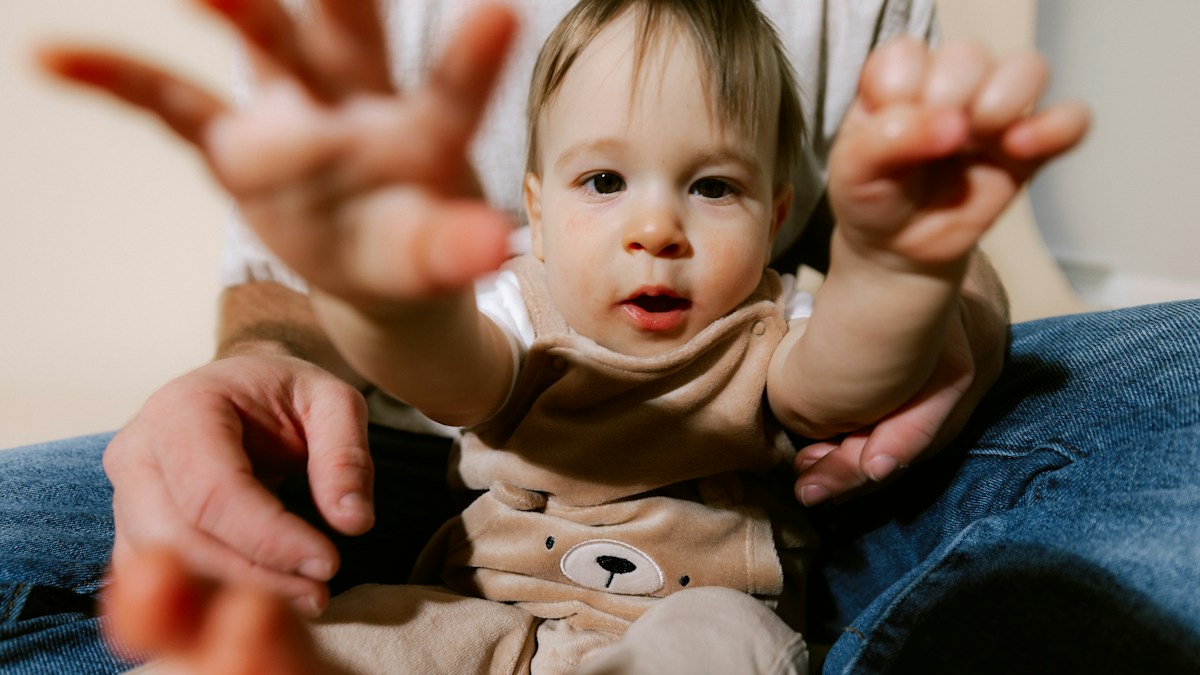
By three months, your baby may feel noticeably more engaged with the world. They might smile more often, make little sounds when you talk, watch people moving around the room and show increasing interest in toys. Their movements may also become smoother as they gain strength and coordination.
This is a period of growing interaction. Your baby is not simply looking and listening; they are beginning to take part in little exchanges with you. A smile, a coo or an excited movement can become the beginning of a conversation.
You may also notice that your baby has favourite ways of playing, familiar routines they enjoy and particular times of day when they are more alert. Getting to know these preferences can make everyday life easier and help you choose activities that suit your baby’s mood.
Table of Contents
- What Changes Around 3 Months?
- Physical and Motor Development
- Vision, Hearing and Sensory Development
- Simple Activities to Try with Your 3-Month-Old
- Developmental Concerns and Checkups
What Changes Around 3 Months?
The third month is often a time when parents notice more interaction. Your baby may become more interested in faces, familiar voices and everyday activities. They might watch you as you move around, turn towards a sound or become animated when you approach.
You may hear a wider range of sounds. Some babies make cooing noises, gurgles and short vocalisations when they are comfortable. They may respond when you speak by moving their mouth, making a sound or smiling.
Your baby’s attention may also last a little longer during calm periods. They might look at a toy, watch someone walking across the room or focus on your face during a conversation.
These behaviours are part of early social communication. Your baby is learning that their actions can create responses from other people. Talking, smiling and responding to sounds help make these early exchanges meaningful.
There is no separate CDC milestone checklist specifically for three months. The third month is best understood as a gradual transition between the two-month and four-month milestone ranges. The examples in this article describe common developmental changes, not a formal checklist that every three-month-old must complete.
Physical and Motor Development
Your baby’s neck and upper-body strength continue to develop. During supervised tummy time, they may lift their head more confidently and spend longer looking around. Some babies begin to push against the surface with their forearms, although the amount of control varies.
When lying on their back, your baby may kick their legs, wave their arms and bring their hands closer to the middle of their body. They may also begin looking at their hands with curiosity.
Hand movements are still developing. Your baby might briefly hold a toy placed in their hand or accidentally brush against an object. Reaching for a toy may become more purposeful over time, but coordinated grasping is still an emerging skill.
Building Strength Through Everyday Play
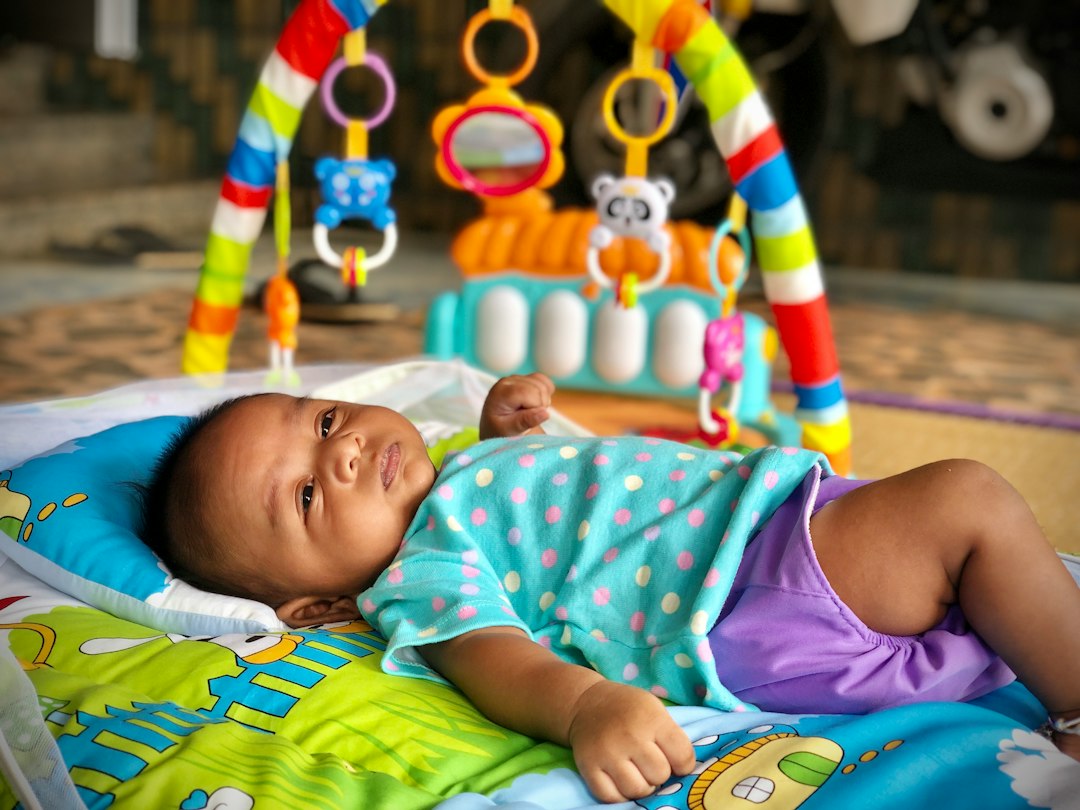
Short periods of floor play allow babies to move freely and practise new movements. A firm play mat gives your baby a safe surface for supervised activity. Place an interesting toy nearby and allow your baby time to look, move and explore.
Tummy time remains useful for developing neck, shoulder and upper-body strength. If your baby dislikes being on their tummy, try shorter sessions, use your chest as an alternative surface while you are fully awake, or make the experience more engaging by getting down at their eye level.
Avoid trying to force your baby’s head or body into a particular position. Let them practise movements naturally and stop if they become distressed. Always supervise tummy time closely. For every sleep, place your baby on their back on a firm, flat surface with no loose bedding or soft objects.
Vision, Hearing and Sensory Development
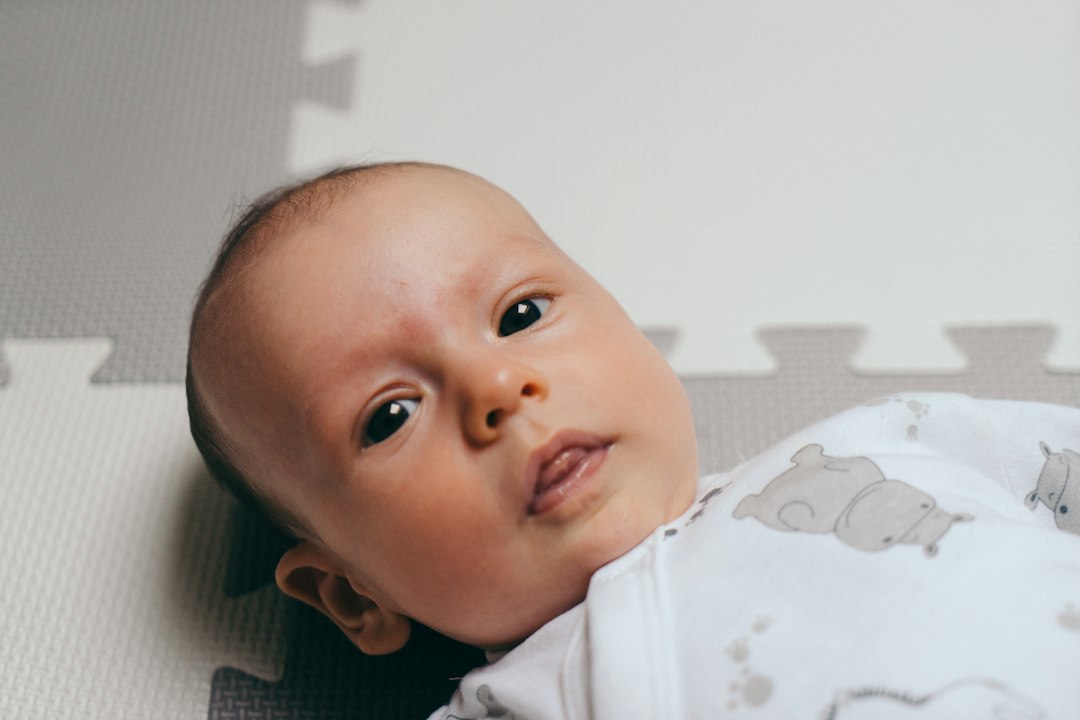
Your baby’s visual attention is gradually improving. They may watch a slowly moving object, look at faces for longer or show interest in colourful toys.
Try holding a toy at a comfortable distance and moving it slowly from one side to the other. Give your baby time to notice it. If they lose interest, move on to another activity rather than repeatedly trying to attract their attention.
Hearing familiar voices is another important part of development. Your baby may turn towards a sound or become calmer when they hear a familiar voice. They may also enjoy gentle singing and repeated sounds.
Babies learn about their surroundings through their senses. During supervised play, they can look at safe objects, hear gentle sounds and feel different age-appropriate textures. Keep sensory experiences simple and avoid loud noises, flashing lights or too many competing activities.
Social and Emotional Development
Your baby may now show more obvious enjoyment during familiar interactions. Smiling when you smile or talk, becoming excited when they see a familiar person and relaxing when held are examples of developing social responses.
Some babies begin to show different reactions depending on the situation. They may become animated during play but look away when they need a break. Turning the head away, yawning, fussing or becoming less responsive can be signs that your baby is tired or overstimulated.
Learning to recognise these signals can make everyday care easier. When your baby looks away, pause rather than continuing to encourage interaction. A quiet moment may be exactly what they need.
Your baby’s relationship with familiar caregivers grows through repeated experiences of being comforted, held and responded to. Talking, smiling and cuddling are not just pleasant activities; they are important parts of early emotional development.
Understanding Your Baby’s Cues
Not every cry means hunger, and not every quiet moment means your baby is ready to sleep. Over time, you may begin to recognise different patterns.
For example, your baby may become more active when they want attention, turn towards you when they are ready for a feed or rub their face when they are tired. These signs are not always easy to interpret, especially on difficult days.
Responding calmly and observing patterns can help you understand what works for your baby. You will gradually become more familiar with their individual way of communicating.

Communication and Cognitive Skills
Communication at three months is becoming more interactive. Your baby may make sounds when you talk and pause as if waiting for your response. You might hear coos, gurgles and vowel-like sounds.
Try copying your baby’s sounds. Then wait a few seconds before speaking again. This gives your baby an opportunity to respond and helps establish a simple conversational rhythm.
Visual attention and early learning are developing together. Your baby may notice a toy, watch it move and begin connecting what they see with what they hear. A gentle rattle, for example, combines movement and sound in an interesting way.
Babies learn through repeated experiences. Reading the same short book, singing a familiar song or showing a safe toy in different ways can help them notice patterns and connections. You do not need to test your baby or teach formal lessons. Ordinary experiences such as listening to your voice, watching your expressions and feeling different safe textures provide plenty of opportunities for learning.
Feeding and Sleep
Breast milk or infant formula continues to provide the nutrition your baby needs. At three months, solid foods are generally not appropriate. Most babies are not developmentally ready for complementary foods until around six months, and readiness should be discussed with your healthcare professional.
Look for your baby’s hunger and fullness cues rather than relying only on a strict clock-based schedule. Hunger may be shown by rooting, bringing hands to the mouth or making sucking movements. Turning away or closing the mouth may indicate that your baby is full.
Your baby may still need frequent feeds, including during the night. Feeding patterns can change as babies grow, and temporary increases in feeding frequency may occur. If you have concerns about feeding, milk supply, bottle intake or weight gain, speak with your healthcare professional.
Sleep is still variable. Your baby may have a mixture of naps and longer sleep periods, with waking during the night still common. Some families begin to notice more predictable patterns, but there is no single sleep schedule that suits every three-month-old.
A calm bedtime routine can help create familiar signals that the day is winding down. You might dim the lights, change your baby’s clothes, sing a quiet song and offer a feed if they are hungry. Continue following safe-sleep recommendations: place your baby on their back, use a firm and flat sleep surface, and keep the sleep area free from pillows, loose blankets and toys. Avoid using sleep positioners or weighted sleep products.
Simple Activities to Try with Your 3-Month-Old
Face-to-face conversation — Spend 2–3 minutes smiling, speaking softly and pausing when your baby looks at you or makes a sound. This supports early social connection and communication. Materials: None. Safety: Hold your baby securely and stop if they look away or become unsettled.
Short tummy-time play — Try a brief session of 1–3 minutes while your baby is awake, placing your face or a safe toy in front of them. This gives practice lifting and turning the head. Materials: A firm, clear play mat. Safety: Stay close and supervise continuously; always place your baby on their back for sleep.
Slow visual tracking — Move one large, baby-safe toy slowly from side to side while your baby lies on their back. This encourages visual attention and eye movement. Materials: One high-contrast or colourful baby toy. Safety: Keep the toy out of reach and avoid small or detachable parts.
Copy-and-respond sounds — Imitate your baby’s coos, then pause for a response for a minute or two. This introduces the rhythm of turn-taking. Materials: None. Safety: Use a gentle voice and give your baby a quiet break when needed.
Songs and picture books — Sing a familiar song or share a sturdy baby book for 2–4 minutes. Your voice, rhythm and facial expressions support listening and early language. Materials: A cloth or board book, if available. Safety: Stay with your baby and keep books and loose items out of the sleep space.
Keep play relaxed and responsive. These activities are opportunities to connect, not tests or exercises that your baby must complete. Follow your baby’s cues and take breaks whenever needed. For more ideas, see our guide to play activities that support baby development.
Developmental Concerns and Checkups
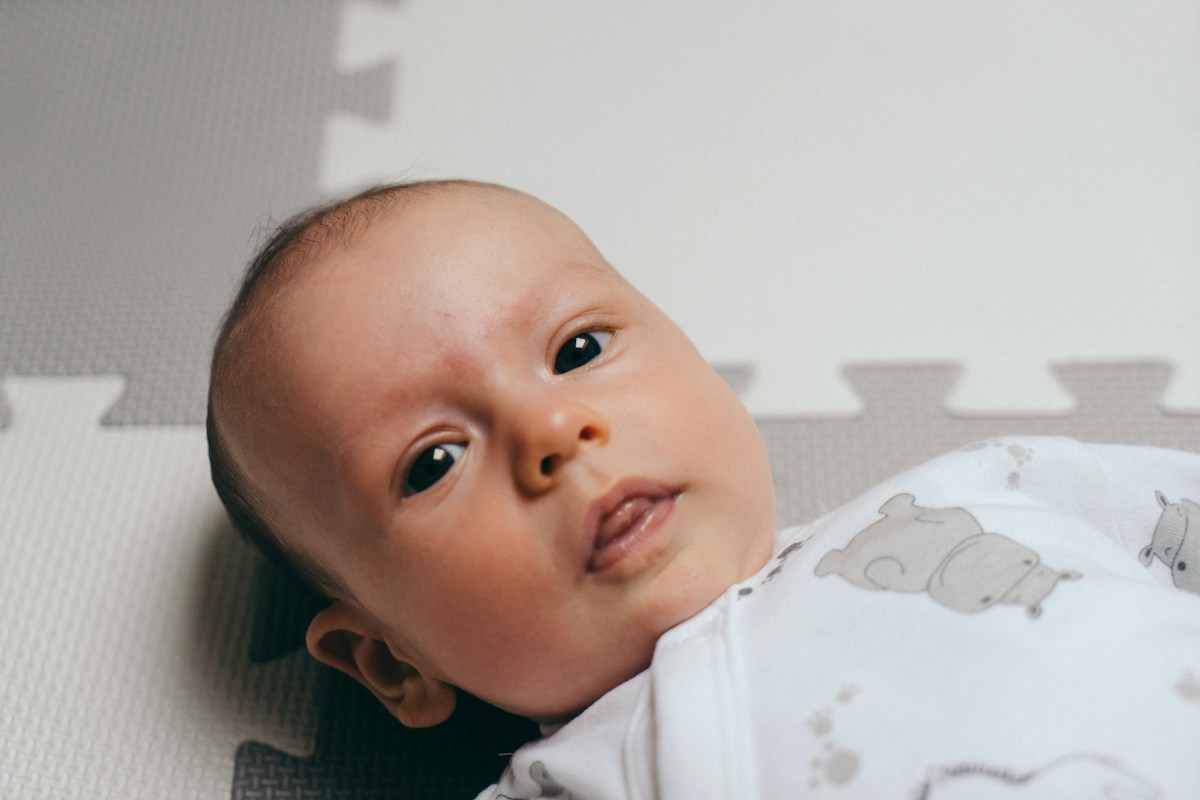
Developmental milestones are helpful conversation starters, but they are not a substitute for professional assessment. If your baby does not seem to respond to sounds, rarely looks at faces, has difficulty moving their arms or legs, or you have concerns about their vision or interaction, speak with your pediatrician.
Also discuss any loss of a skill your baby previously showed. You do not need to wait until a particular milestone age to raise a concern.
Routine health visits are an opportunity to discuss feeding, growth, sleep, hearing, vision and development. Bring up questions even if they seem small. Your knowledge of your baby’s everyday behaviour is valuable.
If your baby was born prematurely, ask the healthcare team how corrected age should be considered when reviewing developmental milestones.
Enjoy Your Baby’s Growing Personality
At three months, your baby’s personality may begin to feel more visible. You may notice favourite songs, preferred ways of being held or particular moments when they are most alert and playful.
There is no need to fill every awake moment with activities. Give your baby time to look around, listen, rest and interact with you. Responding to their cues and enjoying simple everyday exchanges are among the most meaningful ways to support development.

Sources and Further Reading
- CDC – Developmental Milestones by 2 Months
- CDC – Developmental Milestones by 4 Months
- American Academy of Pediatrics – Developmental Milestones from 1 to 4 Months
Continue Exploring Baby Development
← Previous: Baby Development at 2 Months | Next: Baby Development at 4 Months →
Explore the complete series: Child Development by Age: A Complete Guide from Birth to 12 Years
Comments
One response to “Baby Development at 3 Months: Milestones, Movement, Sleep and Play”
[…] feeding, sleep and practical activities. You can also explore our Baby Development at 2 Months and Baby Development at 3 Months guides as your baby […]