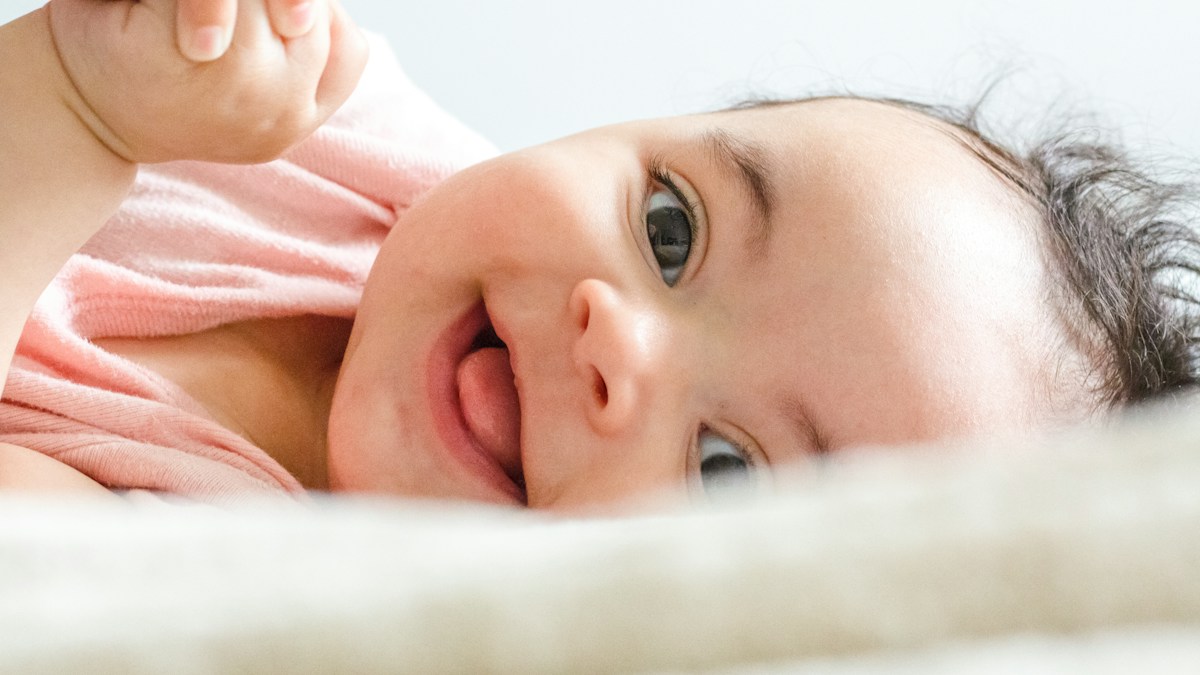
The second month of your baby’s life can bring some of the most rewarding early changes. Your newborn may begin looking at your face for longer, responding to familiar voices, making little sounds beyond crying and giving you the first social smiles. Their movements may also become a little more controlled, although they still need plenty of support.
You might notice that your baby is becoming more interested in the people and objects around them. They may watch you as you move across the room, look at a toy for a few seconds or become calmer when you speak gently. These small moments are signs that your baby is gradually learning to interact with the world.
Every baby develops at an individual pace. The milestones below describe skills that most babies are beginning to show by around two months, not a checklist that every child must complete on an exact date. Enjoy noticing your baby’s progress without feeling pressured to compare them with other children.

Table of Contents
- What to Expect at 2 Months
- Physical and Motor Development
- Vision, Hearing and Sensory Development
- Social, Emotional and Communication Development
- Feeding, Sleep and Everyday Activities
What to Expect at 2 Months
At two months, your baby is usually more alert than during the first few weeks after birth. They may spend longer periods quietly looking at faces, listening to familiar voices or observing their surroundings.
One of the most exciting developments for many parents is the appearance of a social smile. Your baby may smile when you talk to them or smile at them. This is different from the spontaneous smiles that can occur during sleep or in the newborn period. Social smiling is an early way of responding to another person.
Your baby may also seem happy to see you when you approach. They might become calmer when picked up or spoken to, showing that they are beginning to associate familiar voices and touch with comfort.
Other changes can include making sounds other than crying, reacting to loud or unexpected sounds, watching you as you move, looking at a toy for several seconds, briefly holding their head up during tummy time, moving both arms and legs, and opening their hands for short periods. These behaviours are among the CDC’s milestones for most babies by two months.
Physical and Motor Development
Your baby’s muscles are gradually becoming stronger, but movements are still developing. Arms and legs may move in short, sometimes unpredictable bursts. Your baby may stretch, kick, wave their arms or bring their hands closer to their face.
Head control is an important area of progress. During tummy time, many babies can briefly lift their head and turn it from side to side. They may not be able to keep their head steady for long, so continue supporting the head and neck whenever you lift, carry or reposition them.
You may also notice that your baby’s hands are not always tightly closed. They might open their fingers briefly, move their hands towards their mouth or touch their face. These early movements are part of discovering their body.
Why Tummy Time Matters
Tummy time gives your baby an opportunity to practise lifting their head and strengthening the muscles of the neck, shoulders and upper body. These muscles will be important as your baby develops greater control over movement.
Start with short, supervised sessions when your baby is awake and content. You can place your baby on a firm, clear play mat or across your chest while you are fully awake and attentive. Position yourself at your baby’s eye level and speak gently to encourage them to look towards you.
If your baby becomes upset, take a break and try again later. Several short sessions may be easier than one long session. Gradually increase the time as your baby becomes more comfortable. Tummy time is only for awake, closely supervised periods. Place your baby on their back for every sleep.
Vision, Hearing and Sensory Development
Your baby’s vision is developing rapidly. They may be particularly interested in faces and objects with strong contrasts. A simple black-and-white picture or a colourful toy may attract their attention.
At this age, babies can begin watching a person or object as it moves. Their ability to follow movement is still developing, so use slow movements rather than quickly moving toys from side to side.
Hearing is also an important part of early learning. Your baby may react to loud sounds by blinking, becoming still or changing their expression. They may also appear to recognise familiar voices.
Try speaking to your baby during everyday activities. Your voice provides a familiar source of stimulation and comfort. Avoid placing loud toys or music close to your baby’s ears.
Social, Emotional and Communication Development
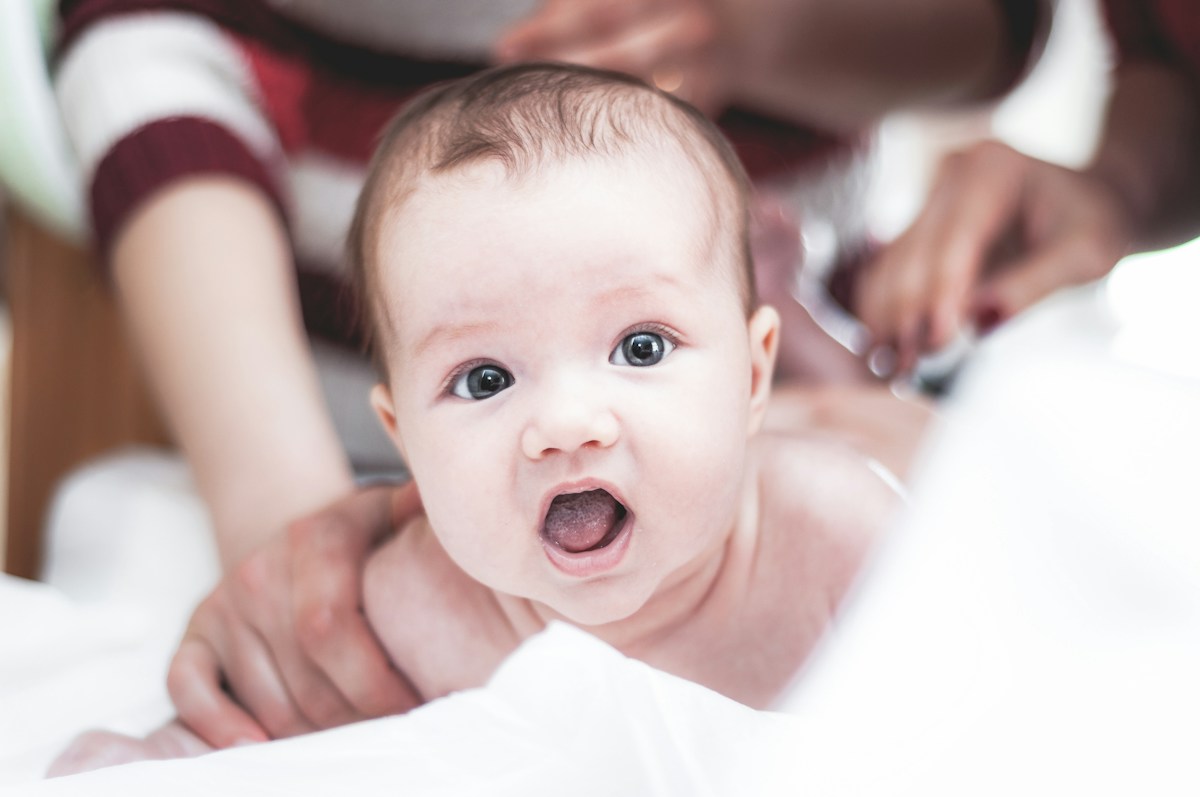
Your baby is beginning to learn that familiar people provide comfort and security. They may calm down when you speak gently or pick them up. Looking at faces can become an increasingly interesting activity, and your baby may respond to your smile with their own.
These early interactions help establish trust. When your baby cries, turns their head, looks towards you or makes a sound, try to notice what they might need. They may be hungry, tired, uncomfortable or ready for some interaction.
You cannot spoil a two-month-old by responding to their need for comfort. Holding, cuddling and speaking gently are important ways of helping your baby feel safe.
Although your baby cannot use words, communication is already developing. At around two months, many babies make sounds other than crying. You might hear soft coos, little vowel-like sounds or brief vocalisations during calm moments.
Try talking to your baby during everyday routines. Describe what you are doing while changing a diaper, dressing them or preparing for a feed. When your baby makes a sound, pause and respond as if you are having a conversation. Reading aloud is useful too; choose a simple picture book, point to an image and describe it in a warm voice.

Feeding, Sleep and Everyday Activities
At two months, breast milk or infant formula remains your baby’s source of nutrition. Babies are generally not ready for solid foods, water or other drinks at this age unless a healthcare professional gives specific medical advice.
Feed responsively and look for early hunger cues. These may include bringing hands towards the mouth, turning the head towards the breast or bottle, making sucking movements or opening the mouth when food is offered. Turning away, closing the mouth or losing interest may indicate that your baby has had enough.
Sleep patterns can still be unpredictable. Your baby may sleep in several shorter periods throughout the day and night, and waking for feeds is normal. Some babies begin to have slightly longer stretches of sleep, but there is considerable variation. A simple routine can help your baby become familiar with the rhythm of the day, but do not expect a strict sleep schedule.
Place your baby on their back on a firm, flat sleep surface for every sleep. Keep pillows, loose blankets, toys and other soft objects out of the sleep space. Room-sharing without bed-sharing is recommended by major safe-sleep guidance.
Simple Activities to Try with Your 2-Month-Old
Face-to-face conversation — Spend 2–3 minutes smiling, speaking softly and pausing when your baby looks at you or makes a sound. This supports early social connection and communication. Materials: none. Safety: Hold your baby securely and follow their cues.
Short, supervised tummy time — Try a brief session of 1–3 minutes while your baby is awake, then build gradually as they become comfortable. This gives them practice lifting and turning their head. Materials: a firm, clear floor mat. Safety: Stay within arm’s reach and stop if your baby becomes distressed; always place them on their back for sleep.
Slow visual tracking — While your baby lies safely on their back, move a simple high-contrast toy slowly from side to side for about 1–2 minutes. This encourages visual attention and eye movement. Materials: one large, baby-safe toy. Safety: Keep it out of reach and never use toys with small or detachable parts.
Singing and shared reading — Sing a quiet song or look at a simple picture book together for 2–4 minutes. Your voice, rhythm and facial expressions support listening and early language learning. Materials: a sturdy baby book, if available. Safety: Keep the book and any objects away from your baby’s sleep space.
Respond to your baby’s sounds — When your baby coos, gently copy the sound and pause for a response. Try this for 1–2 minutes during a calm, alert period. It introduces the rhythm of turn-taking. Materials: none. Safety: Keep your voice gentle and give your baby a break if they look away.
Baby-safe mirror time — Place an unbreakable, baby-safe mirror beside your baby during 1–2 minutes of supervised floor play. Looking at faces can encourage visual interest and interaction. Materials: a securely made infant mirror. Safety: Do not use glass or a mirror that can tip, crack or break.
These activities are invitations, not a schedule or a test. Follow your baby’s attention and stop when they turn away, fuss or seem tired. For more age-appropriate ideas, see our guide to play activities that support baby development.

When to Talk to Your Pediatrician
Developmental milestones are useful guides, not diagnostic tests. If your baby does not seem to react to loud sounds, rarely looks at faces, has difficulty moving both arms and legs, or you have another concern, discuss it with your pediatrician.
It is also important to speak with a healthcare professional if your baby loses a skill they previously had. Do not wait for the next routine appointment if something worries you. Routine checkups are a good opportunity to discuss feeding, growth, sleep, hearing, vision and development.
If your baby was born prematurely, their healthcare team may recommend considering corrected age when discussing developmental progress.
Enjoy the Small Changes
The second month is full of little discoveries. Your baby may begin to look at you more deliberately, make new sounds and show growing interest in the world. These moments may seem small, but they are part of a much bigger process of learning and development.
Keep talking, cuddling, playing and responding to your baby’s cues. Your everyday interactions provide a reassuring foundation for the months ahead.
Sources and Further Reading
- CDC: Developmental Milestones by 2 Months
- American Academy of Pediatrics: Developmental Milestones from 1 to 4 Months

Continue Exploring Baby Development
← Previous: Baby Development at 1 Month | Next: Baby Development at 3 Months →
Explore the complete series: Child Development by Age: A Complete Guide from Birth to 12 Years
Comments
One response to “Baby Development at 2 Months: Milestones, Growth, Sleep and Activities”
[…] vision, hearing, communication, feeding, sleep and practical activities. You can also explore our Baby Development at 2 Months and Baby Development at 3 Months guides as your baby […]