
Discover how your baby develops during the first month, from early movements and reflexes to hearing, vision, feeding, sleep and bonding with parents.
The first month of your baby’s life is a remarkable period of adjustment and development. After spending months in the womb, your newborn is beginning to experience the outside world through sounds, sights, touch, movement and interaction with the people around them.
For parents, these first weeks can feel both wonderful and overwhelming. Your baby may seem to spend most of the day sleeping, feeding and crying. Yet important developmental processes are happening all the time.
During the first four weeks, babies gradually become more responsive to familiar voices, begin focusing on nearby faces, react to sounds and develop stronger patterns of interaction with caregivers. Their movements may still appear jerky and uncontrolled, but their nervous system is developing rapidly.
Every newborn is different. Some babies are more alert, while others spend longer periods sleeping. Some settle easily when held, while others need more time and support.
Table of Contents
- Physical Development at 1 Month
- Cognitive Development at 1 Month
- Vision, Hearing and Sensory Development
- Feeding and Nutrition During the First Month
- Activities to Support Your Baby’s Development
Physical Development at 1 Month
During the first month, your baby’s body is still adjusting to life outside the womb. Movements are largely controlled by natural reflexes rather than deliberate coordination.
Gross Motor Skills
Newborns generally have limited head and neck control. When lying on their stomach, they may briefly turn their head from side to side or lift it slightly. Their arms and legs often move in sudden, jerky motions.
You may notice that your baby moves both arms and legs frequently, keeps their hands tightly closed much of the time, brings their hands close to their face and mouth, turns their head when lying on their stomach and shows strong startle movements in response to sudden sounds or movements. Your baby still needs full support when being held. Always support the head and neck.
Fine Motor Skills
Fine motor control is only beginning to develop. Newborns have a natural grasp reflex: when something touches the palm of their hand, they may automatically close their fingers around it. They may also bring their hands towards their mouth as part of early sensory exploration. At this age, babies cannot intentionally reach for or hold toys in a controlled way.
Newborn Reflexes
- Moro reflex: Your baby suddenly extends their arms and legs, then brings them back towards the body, often in response to a loud noise or sudden movement.
- Rooting reflex: When the cheek is touched, your baby turns towards the touch and opens their mouth, helping them find the breast or bottle.
- Sucking reflex: Your baby automatically begins sucking when something touches the roof of their mouth.
- Grasp reflex: Your baby closes their fingers around an object placed in their palm.
These reflexes are part of normal newborn neurological development. They gradually change as your baby develops more voluntary movement and control.
Cognitive Development at 1 Month
Although newborns cannot yet solve problems or understand language, their brains are actively processing information. During the first month, babies begin recognising familiar sensory experiences, particularly the voices, smells and touch of their caregivers.
Recognising Familiar People
Your baby may become familiar with your voice, smell and the feeling of being held by you. They may respond differently to familiar voices than to unfamiliar sounds. This early recognition is an important part of learning about their environment and developing relationships.
Early Learning Through Repetition
Newborns learn through repeated experiences. Your baby gradually begins associating feeding with being held in a particular position, or recognising familiar sounds that occur during everyday routines. They are also beginning to develop an understanding of their own body through movement, touch and sensory experiences.
Attention and Observation
Newborns have short periods when they are quietly alert and interested in looking around. They may briefly focus on a nearby face or a high-contrast pattern. Their attention span is still very limited, so short interactions are more appropriate than prolonged stimulation.
Vision, Hearing and Sensory Development
Vision
At one month, babies see best at a relatively short distance, approximately 20–30 centimetres. This is roughly the distance between your baby’s face and yours during feeding or cuddling. Your baby may look briefly at your face, prefer high-contrast patterns and appear interested in black-and-white images. Sometimes the eyes may wander or briefly appear crossed as visual control develops. Newborns cannot yet see the world with the clarity of an older child or adult.
Hearing
Hearing is well developed at birth. Your baby can react to loud sounds and may become calmer when hearing a familiar voice. You may notice changes in body movement, facial expressions or alertness when you speak or sing. Talking to your newborn is one of the simplest ways to encourage early communication.
Touch and Smell
Touch is particularly important during the first month. Babies often respond positively to gentle holding, skin-to-skin contact and familiar smells. Your baby may recognise the smell of breast milk and find comfort in the familiar scent of their caregiver. Gentle physical contact also provides opportunities for bonding and emotional security.
Language and Communication at 1 Month
Your baby cannot speak yet, but communication has already begun. Crying is the primary way newborns communicate their needs. They may cry when hungry, uncomfortable, tired, overstimulated or seeking physical contact. Over time, parents often begin recognising differences in their baby’s behaviour and crying patterns.
Your baby may use crying to express discomfort or hunger, facial expressions to respond to experiences, body movements to show excitement or distress, eye contact during short periods of alertness and changes in breathing or sounds when reacting to familiar voices. Some babies also begin making small sounds beyond crying during their early weeks.
How to Encourage Early Communication
Talk to your baby throughout the day. You do not need special educational activities. Everyday conversations are enough. Describe what you are doing while changing a diaper, preparing for feeding or getting your baby dressed. Use a gentle voice, pause occasionally and allow your baby time to respond through facial expressions and movements.
Social and Emotional Development at 1 Month
The first month is an important period for building the foundations of attachment. Your newborn depends on caregivers for comfort, safety, feeding and emotional regulation. Although babies at this age do not yet show social interaction in the same way as older infants, they are already learning through repeated experiences with familiar people.
Building Attachment
When you respond to your baby’s needs, you help create a sense of safety and security. Holding, feeding, comforting and talking to your baby are all important parts of this process. Responding when your baby cries does not spoil them. Newborns cannot manipulate parents or deliberately develop bad habits through being comforted.

Understanding Your Baby’s Cues
You may gradually begin recognising signs that your baby is hungry, tired, overstimulated, uncomfortable or looking for physical contact. Some babies turn their heads away, yawn or become fussy when they need a break from interaction. Learning to recognise these signals helps you respond to your baby’s individual needs.
Feeding and Nutrition During the First Month
During the first month, babies receive all their nutritional needs from breast milk or appropriately prepared infant formula. The World Health Organization recommends exclusive breastfeeding for the first six months when possible, with continued breastfeeding alongside complementary foods thereafter. Families who use infant formula should receive appropriate guidance from their healthcare professional.
Recognising Hunger Cues
Crying is often a late sign of hunger. Earlier signs may include bringing hands towards the mouth, turning the head towards the breast or bottle, opening the mouth, making sucking movements and becoming increasingly alert or restless. Feeding in response to early hunger cues can help make feeding more comfortable.
How Often Do Newborns Feed?
Newborns generally feed frequently, including during the night. Breastfed babies may feed around 8–12 times in 24 hours, although individual patterns vary. Formula-fed babies also require frequent feeds, with amounts and intervals changing according to their needs and growth. Your healthcare professional can help you assess whether your baby is feeding adequately.
Wet diapers, weight gain and general alertness are useful indicators considered during newborn health checks. Do not give a one-month-old baby water, juice or solid foods unless specifically directed by a qualified healthcare professional.
Sleep Patterns at 1 Month
Sleep occupies a large part of your newborn’s day. During the first month, babies often sleep in short periods throughout the day and night rather than following a predictable schedule. They have not yet developed a mature day-and-night sleep rhythm.
Your baby may sleep for short periods, wake frequently for feeding, have irregular sleep patterns, be more alert at certain times of the day and need help settling after feeding or changing. There is no need to expect a one-month-old baby to sleep through the night.
Safe Sleep Is Essential
Always place your baby on their back for every sleep, including naps. Use a firm, flat sleep surface designed for infants, with a fitted sheet. Keep the sleeping area free from pillows, loose blankets, soft toys, cot bumpers and other soft objects. Your baby should sleep in their own safe sleep space, ideally in the same room as their parents during the first six months. Avoid overheating and never place a sleeping baby on a sofa or armchair.
Simple Activities to Try with Your Baby
Your one-month-old baby does not need complicated toys or structured learning sessions. Short, gentle interactions during periods when your baby is awake and comfortable provide valuable opportunities for development.
Face-to-Face Interaction
Hold your baby comfortably and position your face approximately 20–30 centimetres away. Talk softly, smile and allow your baby to look at you. This may support early visual attention, social interaction and familiarity with caregivers. Always support your baby’s head and neck.
Duration: 1–3 minutes. Materials: None.
Gentle Tummy Time
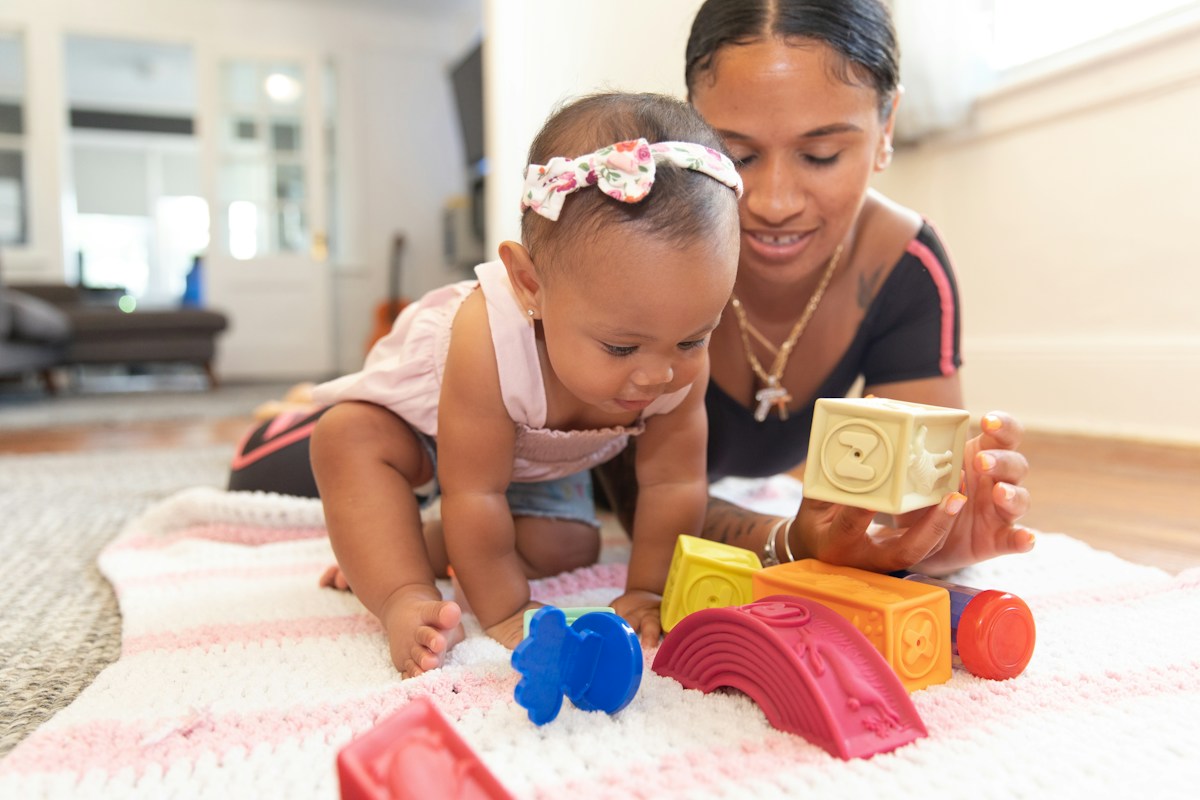
Place your baby on their tummy for a short period while they are awake and closely supervised. You can start with a few minutes and gradually build up according to your baby’s tolerance. Getting down at your baby’s eye level can encourage them to lift or turn their head. This supports neck, shoulder and upper-body strength. Tummy time is only for awake, supervised play. Duration: Start with 1–2 minutes per session and build gradually as your baby tolerates it. Materials: A firm, clear play mat. Safety: Always place your baby on their back for sleep.
Talking and Singing
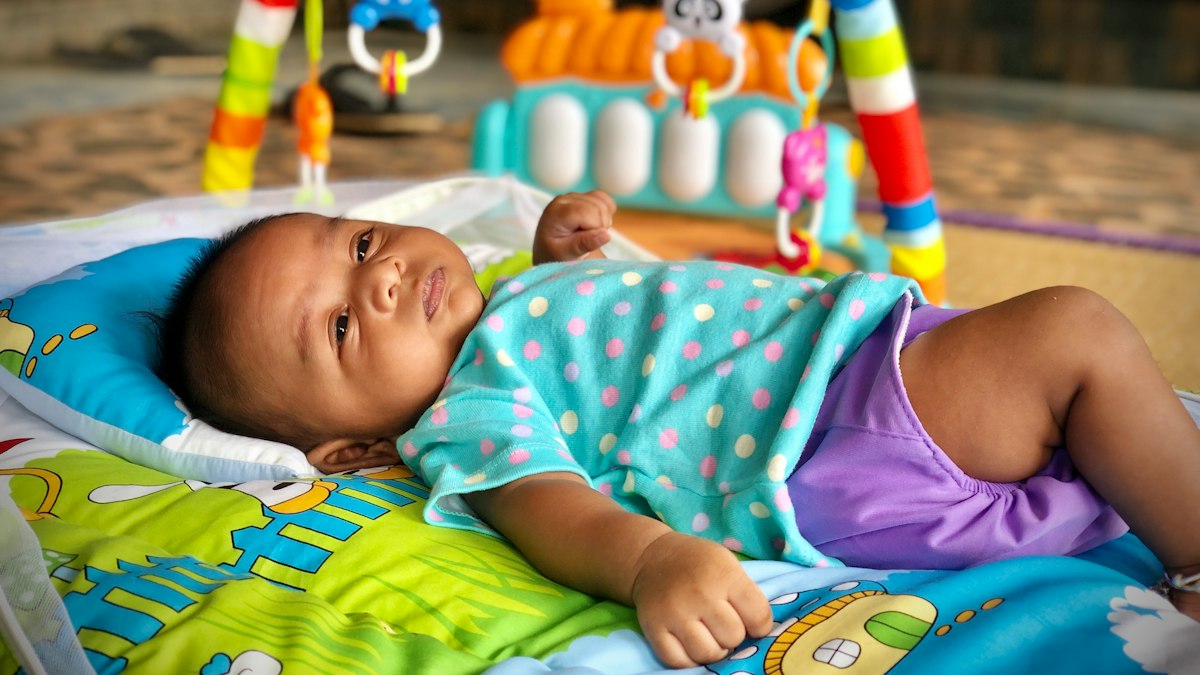
Sing gentle songs or talk to your baby during everyday routines. Describe what you are doing and repeat familiar phrases. This supports listening, early language development and recognition of familiar voices. Keep your voice comfortable and avoid loud sounds close to your baby’s ears.
Duration: 2–5 minutes. Materials: None.
High-Contrast Picture Time
Show your baby a simple black-and-white picture or a high-contrast pattern. Hold it within their comfortable viewing distance and allow them to look at it briefly. This supports early visual attention and sensory exploration. Use baby-safe materials and do not place loose objects in the sleeping area.
Duration: 1–2 minutes. Materials: A baby-safe high-contrast picture card.
Gentle Touch and Cuddling
Hold your baby, gently stroke their back or feet, and enjoy quiet moments of physical contact. Skin-to-skin contact can also be comforting. This supports sensory awareness, bonding and emotional security. Make sure your baby is supported and the environment is comfortably warm.
Duration: 2–5 minutes, or as long as your baby remains comfortable. Materials: None.
Listening to Gentle Sounds
Speak, sing or play soft music at a comfortable volume. Watch how your baby responds to familiar sounds. This supports auditory awareness and early sensory processing. Avoid sudden loud noises and keep sound sources away from your baby’s ears.
Duration: 1–2 minutes. Materials: None; a familiar gentle song is enough.
When Should Parents Discuss Developmental Concerns?
Every baby develops differently, and many behaviours that seem unusual to first-time parents are part of normal newborn development. However, it is important to discuss concerns with a healthcare professional rather than relying only on milestone lists.
Speak with your baby’s pediatrician if your baby rarely responds to sounds, does not appear to react to familiar voices or touch, consistently moves one side of the body much less than the other, has difficulty feeding or sucking, seems unusually floppy or stiff, or you have concerns about vision or eye movements.
Seek urgent medical assessment if your newborn has a temperature of 38°C (100.4°F) or higher, has difficulty breathing, becomes difficult to wake, develops a blue or grey colour, or stops feeding normally. A fever in a baby younger than three months requires prompt medical evaluation.
Also contact your healthcare professional if your baby develops yellow skin or eyes. Jaundice that appears in the first 24 hours needs immediate medical assessment; jaundice appearing later should still be discussed promptly, especially if your baby is feeding poorly, unusually sleepy, difficult to wake, has dark urine or pale stools. Keep any follow-up bilirubin checks recommended by your care team.
By around this age, the umbilical stump has usually separated. If it has not, or the area becomes red, swollen, foul-smelling or starts oozing, ask your healthcare professional for advice. Fever, poor feeding or unusual sleepiness alongside these symptoms needs urgent assessment.
If your baby was born prematurely, developmental progress may need to be considered using corrected age. Ask your healthcare professional how to interpret milestones for your baby. Never hesitate to ask questions during newborn check-ups. Early assessment can help identify concerns and provide appropriate support.
What Comes Next? Baby Development at 2 Months
The second month often brings noticeable changes in your baby’s interaction with the world. Your baby may become more alert, begin making sounds beyond crying, look more consistently at faces and start responding more clearly to familiar people. Head control gradually improves, and some babies begin showing early social smiles. Read our guide to Baby Development at 2 Months to explore this next stage in more detail.
The CDC’s official two-month milestone checklist provides a useful reference for the skills most babies demonstrate by that age. Your baby does not need to achieve every skill on a particular day. Development happens gradually, and individual differences are normal.
In our next guide, we will explore Baby Development at 2 Months, including physical growth, early smiles, communication, sensory development, feeding, sleep and practical activities for parents.
Previous: Newborn Care in the First 4 Weeks: Feeding, Sleep and Health.
Explore the full series: Child Development by Age: A Complete Guide from Birth to 12 Years
Medical disclaimer: This article provides general educational information and is not a substitute for individual medical advice, diagnosis or treatment. Consult your baby’s pediatrician about health, feeding, growth or developmental concerns.
Sources and Further Reading
American Academy of Pediatrics – Developmental Milestones at 1 Month; CDC – Milestones by 2 Months; World Health Organization – Infant and Young Child Feeding; American Academy of Pediatrics – Safe Sleep; NHS – Jaundice in Babies; NHS – Getting to Know Your Newborn.
Comments
One response to “Baby Development at 1 Month: Your Newborn’s First Weeks”
[…] our next guide, we explore Baby Development at 1 Month, including newborn reflexes, physical development, vision, hearing, communication, feeding, sleep […]